Best Beginner Drums for Kids (2026) | Acoustic & Electronic Options
Find the perfect beginner drums for your child. Electronic vs acoustic comparison, junior kit recommendations, and what to buy for quiet practice.
Quick Answer: Best Beginner Drums
- Best Electronic: Alesis Nitro Mesh Kit - Realistic feel, quiet practice
- Best Budget Electronic: Donner DED-80 - Good value, compact
- Best Junior Acoustic: Mendini 16" Junior Set - Real drums for kids
Drums are perfect for high-energy kids who love rhythm. They develop coordination, timing, and provide a great physical outlet. The main challenge? Volume. This guide helps you find the right drums for your child and living situation.
Electronic vs Acoustic Drums
Electronic Drums
- Pros: Quiet (headphone practice), compact, built-in sounds, easier recording
- Cons: Different feel than acoustic, more expensive for quality, requires power
- Best for: Apartments, noise-sensitive situations, home practice
Acoustic Drums
- Pros: Authentic feel, better for technique, no electronics to fail
- Cons: Loud! Needs space, harder to transport, neighbor complaints
- Best for: Houses with space, garages, dedicated practice rooms
Our Top Picks

Alesis Nitro Mesh Kit Electronic Drum Set
Full electronic drum kit with mesh heads for realistic feel. Perfect for quiet practice with headphones.
Pros
- Mesh heads feel real
- Quiet practice option
- 385 sounds
Cons
- Larger footprint
- Assembly required

Ludwig Junior Outfit Drum Set
Quality junior drum set from legendary Ludwig. Built to last with better hardware and heads.
Pros
- Ludwig quality
- Better hardware
- Great sound
Cons
- Higher price
- Still acoustic (loud)

Donner DED-80 Electronic Drum Set
Compact electronic drum set with quality features at a lower price. Great for beginners and apartments.
Pros
- Compact size
- Quiet practice
- 195 sounds
Cons
- Rubber pads not mesh
- Smaller than premium kits

Mendini 16" Junior Drum Set
Scaled-down acoustic drum set perfect for young drummers. Includes everything needed to start playing.
Pros
- Right size for kids
- Real drum feel
- Complete set
Cons
- Can be loud
- Basic quality hardware

Best Choice Products 3-Piece Kids Drum Set
Mini drum set perfect for very young children. Great for developing interest in rhythm.
Pros
- Right size for toddlers
- Affordable
- Fun for young kids
Cons
- Toy-like quality
- Will outgrow quickly
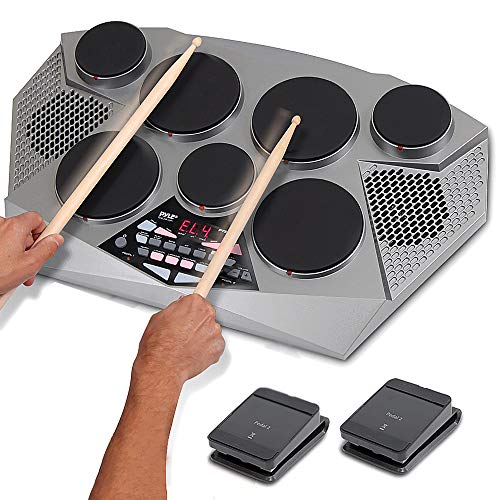
Pyle Electronic Table Top Drum Kit
Compact tabletop drum pad for learning basic rhythms. Roll up and take anywhere.
Pros
- Very affordable
- Portable
- Quiet practice
Cons
- Not realistic feel
- Limited sounds
Quiet Practice Options
If volume is a concern, consider these alternatives:
- Electronic kit with headphones: Best solution for quiet practice
- Practice pad: Portable, silent practice for rudiments ($20-50)
- Mesh heads on acoustic kit: Reduces volume significantly ($100-200 to retrofit)
- Low-volume cymbals: Zildjian and Remo make quiet cymbals
Drum Resources
Budget & Brand Guides
We review them on their own too, in full detail: the Roland TD-02KV, the Yamaha DTX452K and the Alesis Nitro Max.
Frequently Asked Questions
Should I get acoustic or electronic drums for a beginner?
Electronic drums are often better for beginners, especially in apartments or noise-sensitive situations. They allow headphone practice, have consistent sound, and take up less space. Acoustic drums offer a more authentic feel but are loud - you'll need a dedicated space and tolerant neighbors.
At what age can kids start drums?
Kids can start drums around age 4-5 with simple percussion or practice pads. Junior acoustic drum kits work well from ages 5-10. Electronic kits are suitable from about age 8 when they can reach all pads and pedals. Full-size kits are appropriate for ages 11+.
How much space do drums need?
A full drum kit needs about 5' x 4' of floor space. Junior kits are smaller at around 4' x 3'. Electronic kits are generally more compact. You'll also want some space around the kit for movement and a stool.
Not Sure Which Instrument?
Take our free 2-minute quiz and get a personalized recommendation based on your child's age, interests, and your budget.
Take the Free QuizFree, no email required