Learning Piano at 40 and Beyond
Start your piano journey at 40, 50, 60 or any age. Realistic expectations, best approaches, and equipment recommendations for adult beginners.
Quick Answer:
Learning piano at 40+ is absolutely achievable and deeply rewarding. Adults often progress faster than children in the first year due to discipline and cognitive advantages. A digital piano with weighted keys, 20-30 minutes of daily practice, and the right learning approach will have you playing songs within weeks.
"Your 40s, 50s, and 60s are the perfect time to start. You have patience, discipline, and know exactly what music you want to play."
Your Advantages as an Adult Learner
- You can practice when you want, not when parents make you
- You understand abstract concepts (music theory) faster
- You have life experience that informs musical expression
- You're self-motivated - no one is forcing you
- You can afford better equipment and lessons
- You have clearer goals and musical taste
Common Challenges and Solutions
Challenge: Finger stiffness or arthritis
Solution: Warm-up exercises, ergonomic positioning, shorter practice sessions. Piano is actually recommended by many doctors for maintaining hand dexterity.
Challenge: Less flexible schedule
Solution: 20 minutes in the morning before work, or right after. Consistency beats duration. Digital piano with headphones allows late-night practice.
Challenge: Comparing yourself to younger learners
Solution: Stop. You're not competing with anyone. Progress is personal. Adult beginners at 40 who practice consistently outperform teens who don't.
Challenge: Feeling self-conscious
Solution: Digital piano + headphones = complete privacy. No one hears your practice. Take your time.
Recommended Products
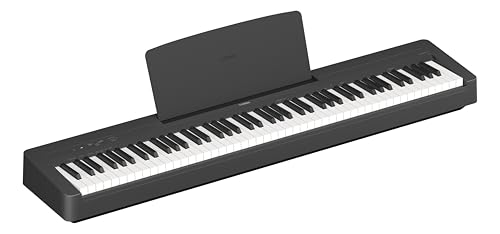
Yamaha P-125 Digital Piano
Excellent weighted keys, great piano sound, compact. The standard recommendation for adult beginners who want quality.
Pros
- Authentic piano feel
- Compact design
- Quality Yamaha sound
- Headphone practice
Cons
- No stand included
- Limited sounds beyond piano

Roland FP-30X Digital Piano
Premium feel and sound. Bluetooth for apps. Excellent key action for developing proper technique.
Pros
- Premium key feel
- Bluetooth connectivity
- Excellent sound engine
- Will last years
Cons
- Higher price point
- Stand/bench extra
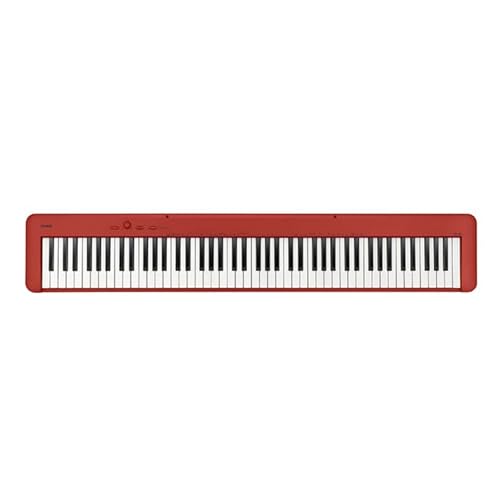
Casio CDP-S160
Great value with scaled weighted keys. Ultra-compact design. Solid choice for budget-conscious adults.
Pros
- Excellent value
- Very compact
- Good key action
- Affordable
Cons
- Fewer features
- Basic sounds
Your Learning Timeline
Hand position, first scales, simple melody with one hand
Both hands together on simple pieces, basic chords
First complete songs, chord progressions
Play multiple songs confidently, read simple sheet music or chord charts
Comfortable with intermediate pieces, develop personal repertoire
Tips for Success
- Start with songs you actually want to play, not just exercises
- Use apps like Simply Piano or Flowkey - designed for adults
- Find a teacher who specializes in adult beginners
- Join an adult piano class for social connection
- Don't skip the basics, but don't get stuck on them either
- Record yourself playing once a month to track progress
Alfred's Basic Adult All-in-One Piano Course
The top-rated beginner piano method book (~$24): lessons, theory, and technique in one self-paced course.
- Self-paced method book
- Lesson, theory, and technic in one
- Highly rated on Amazon
As an Amazon Associate, we earn from qualifying purchases.
More Piano Resources
Related Guides for Adult Beginners
Frequently Asked Questions
Is 40/50/60 too old to learn piano?
Absolutely not. Many adults start at 50, 60, even 70 and become competent players. Your brain remains plastic throughout life. Adults who practice consistently make steady progress regardless of starting age.
How long until I can play real songs?
Simple songs: 2-4 weeks. Recognizable popular songs: 2-3 months. Impressive repertoire: 6-12 months. These timelines assume 20-30 minutes of daily practice.
Do I need an acoustic piano or is digital okay?
Digital is actually better for adult beginners: headphone practice, no tuning, volume control, often better value. Quality digital pianos ($500+) have excellent weighted keys that feel like acoustic. You can always upgrade to acoustic later.
Should I learn to read music?
It helps but isn't required to start. Many adult beginners use chord charts, lead sheets, or learn by ear. Basic music reading can be learned gradually alongside playing. Don't let it stop you from starting.
Will my hands be too stiff?
Unlikely to prevent learning. Piano actually helps maintain hand flexibility. Warm up before practice, use ergonomic positioning, and take breaks. Many pianists play well into their 80s.
Not Sure Which Instrument?
Take our free 2-minute quiz and get a personalized recommendation based on your child's age, interests, and your budget.
Take the Free QuizFree, no email required