Best Violin Books for Beginners
Top violin method books for beginning students. Essential Suzuki, Essential Elements, and other methods compared.
Quick Answer:
The best violin books for beginners are Suzuki Violin School (with a Suzuki teacher), Essential Elements for Strings (school orchestra), and Eta Cohen's Violin Method (traditional approach). Violin strongly benefits from teacher guidance - books alone are challenging.
All Picks at a Glance
| Book | Price | Category | Best For |
|---|---|---|---|
| 🏆 Suzuki Violin School Volume 1 | $8-$12 | Best Method Books | Young children with Suzuki teacher |
| Essential Elements for Strings Book 1 | $10-$14 | Best Method Books | School orchestra students |
| Eta Cohen's Violin Method Book 1 | $12-$16 | Best Method Books | Students with private teachers |
| 🏆 A New Tune A Day for Violin Book 1 | $12-$15 | Best for Adult Beginners | Adult beginners |
| Violin for Dummies | $20-$25 | Best for Adult Beginners | Adults wanting to understand violin |
| 🏆 Schradieck School of Violin Technics | $8-$12 | Technique & Exercise Books | Developing left-hand technique |
| Wohlfahrt 60 Studies Op. 45 | $8-$12 | Technique & Exercise Books | Late beginner/early intermediate students |
Best Method Books

Suzuki Violin School Volume 1
The world-famous Suzuki method. Learn by ear first, then read music. Requires a Suzuki-trained teacher for best results.
Pros
- Proven method
- Beautiful repertoire
- Ear training focus
- Worldwide community
Cons
- Needs Suzuki teacher
- Delayed note reading
- Parent involvement required

Essential Elements for Strings Book 1
The standard for school orchestra programs. Teaches note reading from the start. Works for class or private instruction.
Pros
- School standard
- Reads music early
- Audio included
- Teacher-friendly
Cons
- Less artistic
- Basic repertoire
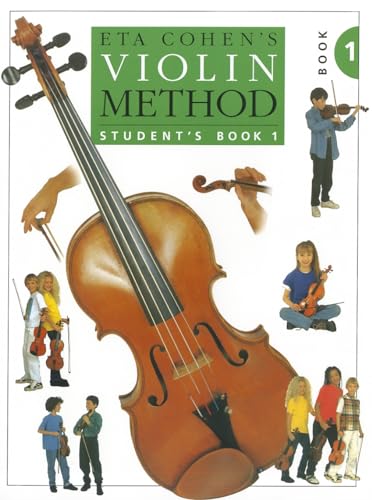
Eta Cohen's Violin Method Book 1
Traditional British method. Careful progression with emphasis on good technique. Popular with private teachers.
Pros
- Thorough technique
- Well-paced
- Clear instruction
- Good repertoire
Cons
- Needs teacher
- Traditional approach
Best for Adult Beginners

A New Tune A Day for Violin Book 1
Modern method suitable for adult beginners. Includes CD with accompaniments. More self-teaching friendly than traditional methods.
Pros
- Adult-appropriate
- CD included
- Clear instruction
- Self-teaching possible
Cons
- Still benefits from teacher
- Basic repertoire

Violin for Dummies
Comprehensive guide for adult self-learners. Covers buying, setup, technique, and playing. Audio/video included.
Pros
- Comprehensive
- Adult-focused
- Audio/video
- Covers everything
Cons
- Self-teaching violin is very hard
- Still need teacher for technique
Technique & Exercise Books

Schradieck School of Violin Technics
Classic left-hand technique exercises. Used by professionals and students for over 100 years. Builds finger dexterity.
Pros
- Essential exercises
- Builds technique
- Very affordable
- Time-tested
Cons
- Boring to play
- For intermediate+

Wohlfahrt 60 Studies Op. 45
Standard etude book for developing players. Musical exercises that build technique. Assigned by most teachers.
Pros
- Standard repertoire
- Musical etudes
- Builds skills
- Affordable
Cons
- Needs teacher guidance
- Not beginner level
Tips for Choosing the Right Book
- Violin is very difficult to self-teach - a teacher is strongly recommended
- Young children (3-6) typically use Suzuki method with parent involvement
- School orchestra often uses Essential Elements
- Adults can make progress with books but should get periodic lessons
- Supplement method books with scale books once basics are learned
More Violin Resources
More Book Guides
Frequently Asked Questions
Can I learn violin from a book without a teacher?
It's very difficult. Unlike guitar or piano, violin technique requires precise supervision. Bad habits are hard to unlearn and can cause injury. Get at least monthly lessons if possible.
What's the best violin book for a 6 year old?
Suzuki Violin School Volume 1 with a Suzuki-trained teacher is the gold standard for young children. Parent participation in lessons is expected with this method.
Is Suzuki method better than traditional?
Neither is 'better' - they're different approaches. Suzuki emphasizes ear training and delays reading music. Traditional methods read music from the start. Both produce excellent musicians.
Not Sure Which Instrument?
Take our free 2-minute quiz and get a personalized recommendation based on your child's age, interests, and your budget.
Take the Free QuizFree, no email required